
Interview with Heribert Hinzen
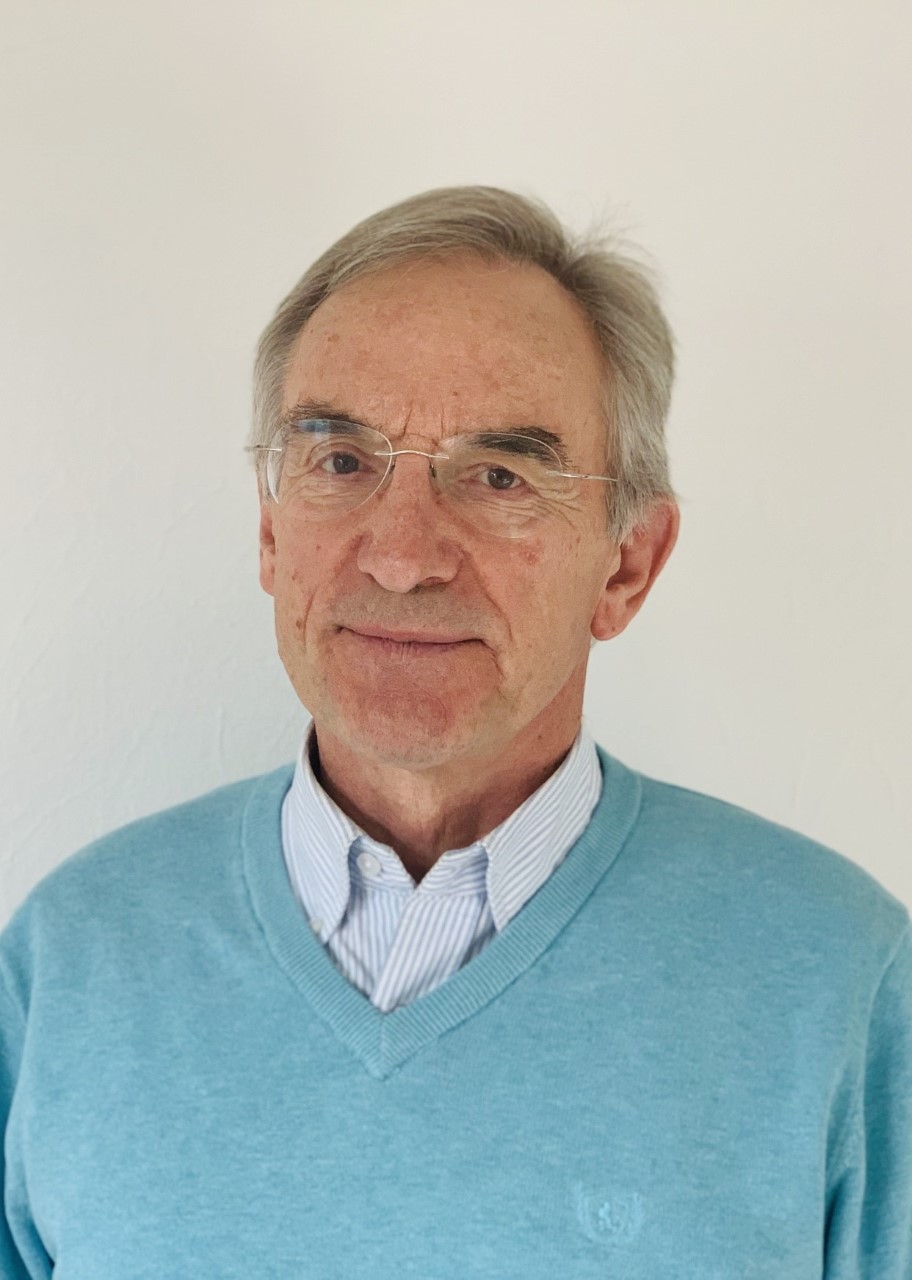
Heribert Hinzen:
I had enjoyed studying a broader mix of human and social sciences at the Universities of Bonn and Cologne from 1967 onwards, but actually it went too quickly with the first degree, and to stop study afterwards. Seminars on Julius Nyerere and Socialism in Tanzania and in the next semester on Kenneth Kaunda and Humanism in Zambia had caught my interest. Part-time teaching, combined with doctoral studies, was something which caught my liking and where I could specialize in comparative studies of education at the University of Heidelberg.
Heidelberg had a research center on comparative studies in African education. A scholarship helped me with an engagement as Research Associate of the Institute of Adult Education in Dar es Salam. A fascinating time, getting involved in the evaluation of a radio mass campaign and at the same time having all the opportunities to meet colleagues, study literature, including the New Year Speech of Nyerere on Education Never Ends – actually a time of learning, deeper than I had hoped for. In 1975 already I dared to write a paper on lifelong learning to be discussed within the Research and Planning Department. My doctoral dissertation later was titled Adult Education and Development in Tanzania.
Back in Germany, the next step was getting closer to our community adult education centres, the Volkshochschulen, where I offered courses on African education, development issues, peace, the world economic disorder as a part-timer. Luckily, the German Adult Education Association (DVV) was looking for a coordinator to manage a project on global learning with components of informing local centers, awareness raising of staff and training of course leaders. I got the job in 1977, and then stayed on within the leadership of the Institute for International Cooperation of what today is called DVV International till 2015. The project on global learning was also quite successful – it continues till today.
AC: Which activity has given you the most joy to do in Adult Education?
HH:
I think it was this mixture of mainly self-directed involvements. Of course, being in the leadership of an organization for almost four decades meant to comply with rules and regulations, tasks and roles which were not strictly free of charge.
Putting a biographical lens on, then I may call it being lucky to smoothly move from studies into lifetime employment. Writing a doctoral dissertation in comparative studies, and then getting a job in international cooperation which I enjoyed to manage, is a major part of the story.
Such stories have a beginning and an end, and many things in between.
The participation in the International Seminar on Comparative Structures of Adult Education in Developing Countries, convened in 1975 by UNESCO in Kikuyu, Kenia, had obviously a long-lasting effect. The coordination of a study on The Tanzanian experience: Education for Liberation and Development for the UNESCO Institute for Lifelong Learning (UIL) left a mark for numerous activities and joint ventures as a consultant, an Honorary Fellow, or serving on the Editorial Board of the International Review of Education.
Almost in parallel was this flow of full-time employment with DVV International, in the institutional leadership in Bonn or running offices in Sierra Leone, Hungary or Laos, each for several years of living and working abroad. It may have been this continuous change between managing headquarters and working in country or regional offices which we called a rotating system, and actually I served as a sort of guinea pig for which I am thankful. It worked for me and later for many others to learn from the field experiences, and at the same time bringing in my own experiences. Somehow, I felt it was a giving and taking. It could be called an informal professional lifelong learning process with both components – innovation and continuity.
The converging activities and events between DVV International and UIL are many, including those CONFINTEAs as World Conferences on Adult Education, networking in the preparation, drafting outcome documents, arranging follow up, building bridges to national, regional or global activities. Certainly, the involvement in the World Education Fora of 2000 with Education for All, or the 2015 one with an Incheon Declaration which was incorporated into the Sustainable Development Goals, engaging in the Global Education Monitoring Report.
AC: You have contributed substantially to linking adult education to international development and cooperation, especially in literacy and global equity. In this work you have focused on implementation and capacity-building. What do you consider to be your most important achievements in Adult Education?
HH:
Actually, I find it quite difficult to talk about it. Recently I did a sort of reflection on my involvements in our field, looking at literacy efforts towards lifelong learning over the last five decades. As I had mentioned, moving successfully through school and university years, searching and finding a professional engagement, all this went quite well.
However, there was this intention and hope to do something that makes this world a better one, more peaceful, more social justice, reducing poverty – through adult education. Looking back at the mid-1970s when my working life started, the war in Indochina was coming to an end. But where are we now with wars raging in Ukraine, Palestine, Libanon and Iran with all its disastrous effects on people and infrastructure in these countries, regionally, and indeed globally.
Actually, we have resulted in a world which is producing refugees, asylum seekers, and a growing level of forced migration, often environmental destruction also.
And it may not be wrong to state that a lifetime involvement in adult education and development could not really result in a situation where I could feel at ease with where we have reached, unless we call it a success to at least preventing a potential total collapse so far.
It should not sound like the old grumbling man. My daily life is not full of frustration. Health and wealth are good enough for a decent family life with children and grandchildren, in between gardening and tennis, embedded in activities as a reader in the kindergarten, environmental protection and raising peace awareness as member of local associations. Somehow still moving and navigating between ideas and behaviors found in both - Sokrates and Sisyphos.
Yes, there are those achievements one could even enumerate: thousands of participants in seminars and workshops, hundreds of publications of different sorts, those many keynotes and lectures in conferences. For achievements one could also look at those laudations when receiving awards, entitled with honorary doctorates or professorships. All of this I am proud of as it is something that is recognized as a service to others, based on successful work, achieved in collaboration with colleagues, friends and partners.
Therefore, maybe a big achievement has been to help build an institution, ensure professionalism paired with solidarity, developing it as a place where people like to work, and where many people think that it at least in a small way to improve lives of those reached.
AC: Why did you like to be at the same time a director and a professor?
HH:
You may know from your own studies: We learn a lot about certain subject matters, but if I go back and ask myself where and when I studied to become a managing director of an institute, then I can´t remember. Actually, it was all learning on the job. At the time I moved into the leadership of DVV International, it was a small organization, few people, small budget. But there was motivation and engagement to grow, let us call it luck in building relationships for cooperation and partnerships in Germany, in Europe and indeed globally.
Collectively we developed a certain strength in finding colleagues with capacities to build on. Actually, we grew together, more people in headquarters, more offices in countries, moved into regional structures, decentralizing responsibilities.
It was also the larger context of the institutional backing: Almost a thousand community-based Volkshochschulen, with millions of participants yearly, with regional associations and a national DVV with reputation and recognition, grounded in a history of now more than a hundred years of experience. And one of these cooperation areas which I found quite interesting and important was the so-called Working Group of Volkshochschulen and Universities. It was the attempt of the universities to build lifelong learning centres making use of their resources in academic further training. At the same time, especially when looking at the educational sciences, then the universities should be providing their services in research and training not only for teachers and schools of the formal system, but also for people and institutions in adult learning and education.
Therefore, while I was director of the DVV office in Freetown in the 1980s, I served in parallel as Visiting Professor of the University of Sierra Leone, teaching in their diploma and certificate courses in adult education. It was a great opportunity also to engage in research: We encouraged students to write their dissertations on traditional forms of learning, or on the training in the informal sector. In partnership with the People´s Educational Association of Sierra Leone we engaged in the collection of stories and songs, of riddles and proverbs. We collected in ten out of the twenty languages in the country, and students where collectors, translators, and editors as they helped in publishing also as literacy materials using indigenous stories.
It was similar during the time I was director of the DVV office in Budapest. We had a strong cooperation with Government on policy, legislation, and financing of adult education as well as strengthening civil society organization in the community-based efforts. However, a major attempt was also teaching and research with several universities, especially as Honorary Professor of the University of Pécs, something which continues now for the past 30 years. There was so much interest by the students in understanding European adult education, and that has not diminished till today where the University of Pécs is a partner in the consortium of the Adult Education Academy of the University of Würzburg.
AC: What has been your most intense period in working life?
HH: Actually, the first decade of the new millennium.
Coming back from Hungary at the end of 1999, and taking over again as Director of headquarters, I kept this interest of bringing management, advocacy, and academic work together. To be honest, not at all easy.
While we were packing as a family to move back home, the war(s) within Ex-Yugoslavia started and led to genocide and disasters that eventually broke up the unity of the country into smaller states. We got support from the Balkan Stability Pact and developed a larger project with Albania, Bosnia & Herzegovina, Croatia, Kosovo. Macedonia, Montenegro, Serbia and Slovenia as partners and a Regional Office in Sofia, Bulgaria, which after some time was transferred to Sarajevo. It was a difficult but highly rewarding endeavor, and DVV International till today has strong relationships with colleagues and partners in the Balkan region.
Early in 2000 there was the World Education Forum in Dakar, 1500 participants from Governments, multilateral organizations, international NGOs. The adult education community was rather small. The outcome document Education for All (EFA) had only a light flavor of lifelong learning, and the slogan, EFA means Except for Adults had some ironic truth. As Editor of the journal Adult Education and Development I made sure that the discourse on lifelong learning where adult education plays an increasing role got intensified. It took some time and the challenge was a another widely used slogan: Basic education for the South and Lifelong Learning for the North.
On the 11th September 2001, a flight took me from Frankfurt to the Southern Caucasus for consultations in Azerbaijan, Armenia and Georgia. Arriving in my hotel in Baku I routinely started to un-pack my luggage while I switched on the TV. There was this monstrous fiction film, I at least thought that way, as could not understand the language used, switched to another channel, and the same film came up, the same on the next channel also, but with the Russian President giving an interview. It was only next morning in the German Embassy where I learned what had happened with the Twin Towers in New York. After some days of flight restrictions, I could continue my travel between the three countries using train and bush-taxi. The work with partners in Armenia and Georgia is still strong, and younger colleagues from there moved into DVV headquarters, and serve now as Directors in Regional Offices.
Developments in Central Asia in that period led DVV International to open offices in Kirgizstan, Uzbekistan and Tajikistan which are active as ever today, and even the work with partners in Afghanistan continue – despite all the difficulties and hinderances.
At the end of 2009 a most rewarding period lasting till 2015 started with opening a new Regional Office for Southeast Asia and moving to Vientiane, Lao PDR. In many occasions I was reminded of my years at university where we were demonstrating against the war in Indochina. Laos is the most heavily bombed country per head in the world, and in some of the areas where villagers wanted to combine literacy activities with agricultural work, the clearance of un-exploaded ordinance had to come first. In Cambodia the Khmer Rouge excesses had become part of reconciliation activities where our partners were involved. In Vietnam the SEAMEO Center for Lifelong Learning became a partner, strong regional allies in strengthening community learning centres. ASPBAE continued to be a creative partner, especially on the way to the next World Education Forum which took place in Incheon, Korea, and developed the education part of the Sustainable Development Goals.
AC: In addition – European and International leadership
HH:
The European Memorandum on Lifelong Learning opened many new avenues for adult learning and education, including opening a tender for researching the field. At the time I served as Vice-President of the European Association for the Education of Adults (EAEA), we successfully applied, and came up with the study on Adult education trends and issues in Europe including a wealth of findings and recommendations. The European Commission followed on with a Communication called Adult leraning: It is never too late to learn in 2006, followed by the Action plan on adult learning: It is always a good time to learn a year later. EAEA became a major partner of the TEACH project (Teaching Adult Education in Continuing and Higher Education), where the University of Torun was in the lead of a consortium with some 15 partners from universities, Government and civil society aiming at creating modules for the new programs in bachelor and master studies.
EAEA was also quite an active partner also in the international cooperation. Sometime in mid-2000 a major conference on adult education in China could be initiated together with the Asia South Pacific Association of Basic and Adult Education (ASPBAE) and the International Council for Adult Education (ICAE). That conference paved the way for many new activities, too many to mention them all here. But being a Vice-President of ICAE at the time it should be noted that the World Assembly in Kenya in 2007 was important to strengthen the civil society movement in adult education. It was an opportunity for a Special Issue of CONVERGENCE. The International Journal on Adult Education at a time where we were moving towards the next CONFINTEA.
The joint global leadership of adult education associations, especially ICAE, EAEA, ASPBAE and DVV International played a major role in bringing the Agenda for the Future from CONFINTEA V in Hamburg to CONFINTEA VI in Belém in 2009, where we were strong enough to have several of us serving on the drafting committee for the Belém Framework for Action. On the way there were important pre-conferences in Seoul for Asia Pacific and in Budapest for Europe.
AC: How could you come closer to the Hall of Fame?
HH: If you look at the HOF website you will realize that in 2006 there were actually two inductions. A regular one with some ten new members from the US, and a special European Hall of Fame Class with a wonderful induction ceremony at the University of Bamberg led by Jost Reischmann, with some ten colleagues, most of whom you will know, like Joachim Knoll, Ekkehard Nuissl, Franz Pöggeler, Rita Süssmuth, Alan Tucket, and I was fortunate to be among them.
Becoming a member is fine, but to play an active role was something I looked for through two initiatives. For several years I served on the Selection Committee with a certain interest to make the Hall of Fame coming closer to really become more international in its membership. Second to bring the Hall closer to global or European events, becoming exposed to the discourse on adult education and lifelong learning. A good opportunity to bring a regular induction closer was the European Pre-conference of CONFINTEA VI in Budapest, and if you look at the names of the 2008 inductees, you will see some development: John Aitchison, Michael Omolewa and Adama Ouane from Africa, Maria Lourdes Almazan Khan and Shinil Kim from Asia, Dénes Koltai and Laurentiu Soitu from Central-Eastern Europe were among them.
Today, I am still rather close, but more on the level of nominations or secondments of deserving individuals, but also for the organization award, and I am happy that ICAE, EAEA and ASPBAE were among them.
AC: From your extensive bibliography – what would you like to mention?
HH: Yes, the list is long. And some are old enough to have access easily. Maybe one of the most interesting and less know books is Fishing in Rivers of Sierra Leone. Oral Literature. It is a collection of hundreds of stories and songs, riddles and proverbs, and I still recall the events where the storytellers started at 9 in the evening, and continued till sunrise. What a rich oral culture which is getting lost over the years of technological changes.
But maybe I should give three shorter articles which are available on-line:
- Chris Duke, Heribert Hinzen (2018). Adult learning and education: Active global citizens for sustainable development – a political, professional and personal account. CR&DALL Working Paper Series, WP 401/2019. University of Glasgow. http://cradall.org/workingpapers/adult-learning-and-education-active-global-citizens-sustainable-development-political
- Heribert Hinzen, Elisabeth Meilhammer (2022). 100 years of Volkshochschule in Germany – 50 years of DVV International: Signposts for local and global comparative perspectives on adult learning and education (together with Elisabeth Meilhammer). https://doi.org/10.1007/s11159-022-09944-y
- Heribert Hinzen, Maria Slowey, Huu Phuoc Khau (2024). Learning from the past for the future: Signposts and landmark anniversaries in adult learning and education. https://doi.org/10.1007/s11159-024-10089-3
AC: Are you still active, and in which areas?
HH:
Sometimes I ask myself if this is the final turn on the carousel – or how much can you be staying on active in retirement? Official retirement was in 2015, and now some some ten years later I am moving closer to be 80 years old. Some say, it is enough, others claim go on. The German proverb is – wer rastet, der rostet (who rests, rusts).
PIMA is a rather young and small organization of civil society to engage in adult learning, actually in two ways – as part of the movement involving in climate justice, gender parity, peace as examples. At the same time, many of the PIMA members are professionals with specific knowledge which we try to work through in webinars and the PIMA Bulletin, like recent special issues on artificial intelligence, learning in later life, or higher education in a lifelong learning perspective. I still serve on the Committee, earlier I had my periods as Vice-President.
I still have a good contact with DVV International. Together with partner we just published a report on CONFINTEA VII implementation in Armenia, Georgia, Moldova and Ukraine. Still in the making is a study to look at the support local authorities can provide to adult learning and education, grounded in some ten case studies, additionally also a relevant policy paper. Bosnia and Herzegovina Government is working on a renewed strategic platform with systemic view on adult education, and I am happy to help in the background. Participation in a High-Level-Forum by the European Training Foundation and DVV International helped in up-grading knowledge in a better understanding of adult learning systems.
University engagement is reaching a more complicated level as artificial intelligence is taking over in many respects. However, I am still teaching in the Master on Adult Education and Lifelong Learning at the University of Würzburg, including their double degree with the University of Padua. I enjoy the yearly Adult Education Academy where the University of Würzburg in a consortium with some 15 partners is hosting a hundred participants on PhD and Master level in comparative studies of adult education. Active support is still possibly for universities I used to be close to in Hungary, Korea, Moldova, and Romania.
I keep an interest how those other organizations I was working with through those decades and how they develop, like those here in abbreviation – ICAE, EAEA, ASPBAE, ISCAE, PRIA, UIL, and the Hall of Fame. And it is not only the organizations, but it is still concerned with colleagues and people, young and old.
Meeting so many people, many colleagues becoming friends. Loosing Chris Duke whom I first met in the mid-1970s, and then organized, wrote, edited so many things together, was a deep cut. But also remembering Joachim Knoll, Paul Belanger, and Rita Süssmuth who died most recently. Luckily, there are many more who are still alive with us, and where it has been a joy to engage and work with, hopefully for some more years to come.
Last update
08.07.2026