
Interview with Alan Tuckett
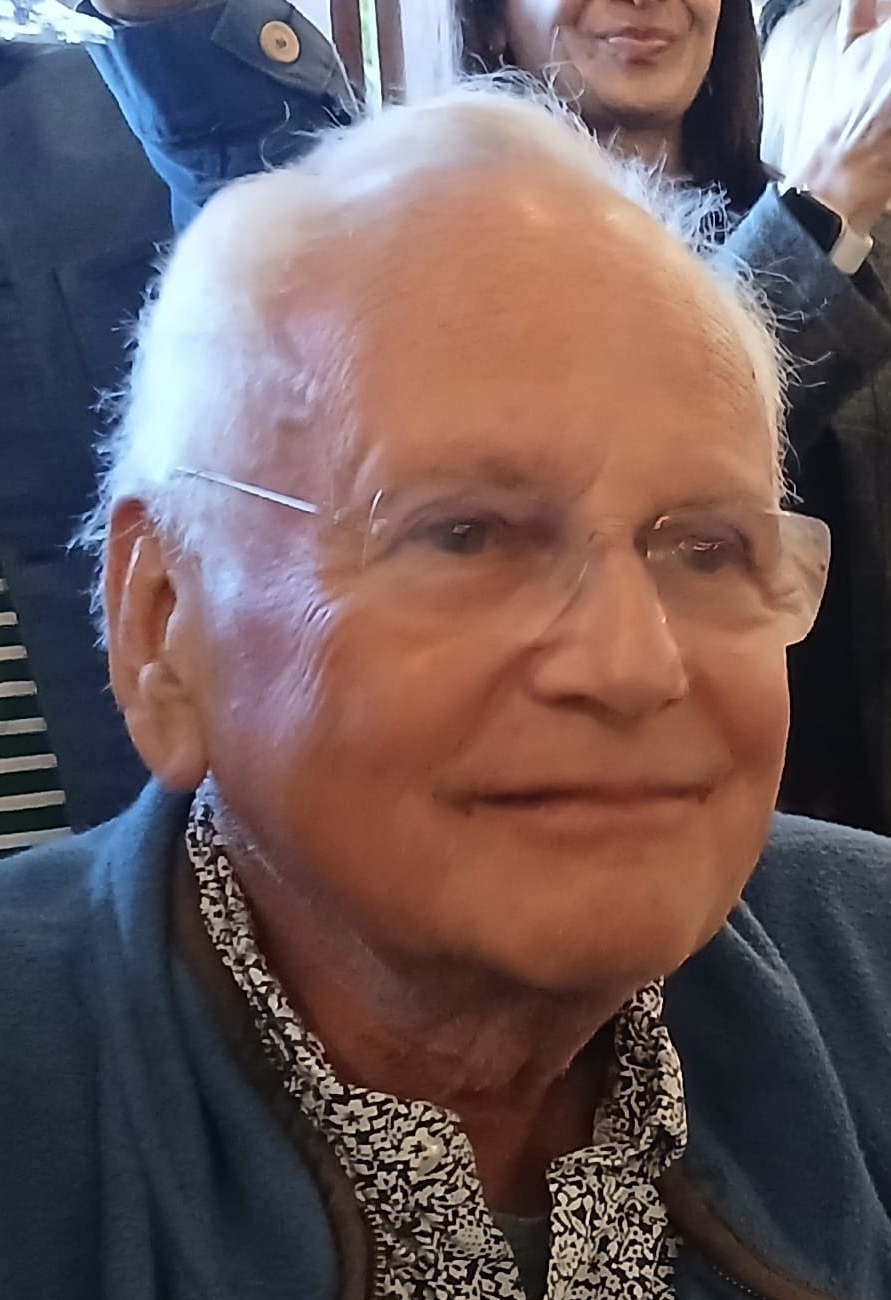
Arne Carlsen: Alan, you have made adult learning visible and politically relevant through public advocacy and campaigns, and you are known as a leading advocate, promoting participation and learners’ rights. What do you consider to be your greatest achievement in adult education?
Alan Tuckett: What is an achievement? One reading of my career looks back at institutions I worked in, which, however vibrant in their time, have closed, defeated by remorseless neo-liberal policies. From that perspective I spent a working life where alongside others I stuck my finger in the dyke, seeking together to protect life-wide, lifelong learning against the prevailing climate in which policy makers funded narrow utilitarian skills for labour market entry at the expense of liberal, aesthetic, ethical, ecological and democratic studies.
But that perspective misses the exhilaration of the work, the excitement in seeing a newly literate middle aged man holding his newly published stories; the pleasure in the eyes of a 93 year old Welsh care home resident finally beginning to master her mother tongue; the emotional intensity of the first Adult Learners’ Week in South Africa held on Robben Island; and the shared triumph in persuading government to abandon a bad policy.
As I thought about your question Arne, I decided it was not easy to evaluate the weight of local, national and international experience, so I thought I would highlight experience in each.
My first full-time job was as Principal of a small liberal arts centre based in the Quaker Meeting House in Brighton. The Friends Centre was a utopian initiative, created like the UN in the aftermath of World War Two. Soon after I started, I read Mike Newman’s short publication, Adult education and community action. It made clear that for adult education to make a difference it had to ask who doesn’t come, and what can be done about it. The major outcome was to begin adult literacy work at the Centre, and, incidentally, to contribute to starting a national adult literacy campaign that was jet fuelled soon after by the BBC’s decision to mount a yearlong literacy series on prime time television. We were blessed by finding a stunning group of staff. It was not long before our learner centred curricula, inspired by Freire, upset our local Member of Parliament. He called for inquiries from the 3 government departments part funding us, saying our students had vulnerable minds! After 3 months the government decided not only that our materials were NOT biased, but they were the best in the country. They were then published by the national literacy agency.
The centre, situated in the centre of Brighton attracted many group seeking change – to save the West Pier, to debate homelessness and squatting, but also attracting Ivan Illich, Yevtushenko and Allen Ginsberg to come and read.
Despite all that East Sussex County Council decided to cut all adult education. After the usual petitions and marches proved ineffective, we decided to run a teach in for 24 hours a day from Monday at 9am to Saturday at 9pm. Everyone taught free, something they were passionate about. People could pay anything to attend, and the event was sponsored for each hour learning was happening. Astronomers worked all night in the garden, pensioners painted the night away, I taught an all-night history of rock music with 88 students. There was a Messiah sing in, a peace conference role play for Zimbabwe, women in detective fiction. Little happens at night and radio and TV programmes sought daily updates. Half the people who came had never been to adult education. People came out of classes, and helped in the canteen, or cleaned bathrooms. At the end of the week, the Council leader, who began saying people don’t want to pay for tap dancing on the rates said on the national news that he’d been badly advised. The curs were dropped, and for months all the Centres classes were full. It was clear that learning in action gave confidence and that learning in one context leaks to be applied elsewhere.
From the Friends Centre I moved to be Principal of a very large inner London adult education institute with some 18,000 students. Much of my work was institution building, budget management and encouraging the creativity of the 70 plus full-time staff as we focused on making a difference to marginalised and under-represented communities whilst offering a broad public programme. It was a time of social conflict in inner city Britain, and the Greater London Council began initiatives to combine empowerment of communities with local economic and social development. Our institute was one of two that secured funding to work on Popular Planning. The idea was to engage local people in developing plans that would meet local community priorities rather than the ideas venture capital might develop. The closure of Battersea power station, a huge site on the banks of the river Thames but surrounded by narrow streets with high density housing provided a key example. Public meetings and discussions made clear that whatever happened more pressure on local roads was unacceptable. Another group assembled and published Wandsworth Black Pages, a directory of all local ethnic minority led firms in the area and the services they offered. Arising from a childcare conference, participants persuaded a local supermarket to include a crèche in their development plans, so that single parents in local high-rise flats could shop locally, rather than hiring a babysitter and going into central London. The proposal was successful, and similar supermarkets around London adopted it. Developing plans, and engaging in advocacy was confidence building, and a key part of community regeneration.
Halfway through my time in London I attended a conference in Sweden of the International League for Social Commitment in Adult Education, a utopian initiative of American liberals and European radicals. I knew no one there but somehow came back as President for the next year. ILSCAE had no money, yet ran ten conferences over the next decade, drawing on the generosity of host institutions, and raising money for participants in the global South. ILSCAE reinvented itself each year, and we worked alongside the Sandinista post-literacy campaign in Nicaragua, were hosted by Yasser Arafat and the Palestine Liberation Organisation in Tunis, and met during the Troubles in Northern Ireland. It was ramshackle and inspiring, always self-critical, but opened all our eyes to the richness of response to challenges to be found everywhere. Budget cuts alas did their work, and the League closed in the late 1990s, but left an invisible college of practitioners touched by the experience.
At the end of my time in London the Inner London Education Authority was threatened with closure by Mrs Thatcher’s government, to be replaced by separate services in its twelve-constituent local authorities. ILEA had the UK’s largest, most innovative adult education service, and it was clear that if closed the individual boroughs could not match it. I was seconded part-time to ILEA to help prepare the case for maintaining a post-school ILEA, should the decision to devolve schools be taken. I wrote a defence paper, highlighting the strengths of its polytechnics, colleges, adult and youth service, worked on press releases, organised meetings, meanwhile doing my day job in adult education. The campaign was lost, and adult education in London was cut severely in subsequent years.
Before its final closure I was appointed director of the National Institute of Adult Continuing Education, NIACE, and stayed there twenty-three years. At first it was running a deficit budget of less than 1 million pounds a year, had 18 staff, a membership that ranged from the Arts Council, the BBC and ITV, the Trades Union Congress, the Confederation of British Industry, university extra-mural departments, colleges, voluntary organisations like the Workers Educational Association, and local authorities. Despite this it had little public profile. At its peak NIACE had a 45-million-pound budget, 300 staff, and was a leading publisher, a major quantitative and qualitative research organisation and development body. I was lucky to attract brilliant colleagues, both in the leadership, notably Sue Meyer and Peter Lavender (IACEHOF 2025), specialist development colleagues, and by the Institute’s governors, and members.
Two years into my time at NIACE the government published a White Paper, outlining future policy for post- school education. It proposed to legislate to limit public support for adult education to qualification courses funded nationally. We convened meetings, wrote press briefings, worked with local government associations to collect 600,000 signatures for a petition against the proposal, and the National Federation of Women’s Institutes mobilised its 9000 local branches to write in to protect community based adult education. We found a merchant banker who had gone to flower arranging classes and opened a flower shop, employing half his fellow students, and the national press made a lot of the story. The Department had to take on extra staff to answer all the correspondence. Within three weeks the Minister ‘clarified’ the policy. Only qualifications bearing courses, pursuing ‘national’ priorities would be funded centrally. Local authorities could continue to fund other classes (albeit with less money). The campaign continued throughout the passage of legislation and had a major impact on the way the new law was implemented.
In1992, just as the law was passed NIACE, encouraged by active members, mounted the first Adult Learners’ Week to celebrate the extraordinary diversity of ways adults learn, and to encourage others to join in. We secured partnership with the BBC who put short motivational films on at prime time, independent television companies, who created programmes highlighting the stories of regional award-winning learners. We held a national awards ceremony, a Parliamentary reception, and the Employment Department funded a free national telephone helpline for the week. It attracted 55,000 calls, half from unemployed adults, and within 3 months more than half had signed up for courses or found jobs. We published research on adult participation, and commissioned studies on under-represented groups. Every local body was encouraged to organise their own activity.
The Week was a celebration; it highlighted the passion and fun in adult learning. It provided a vehicle for engaging with politicians and policy makers, and a practical promotional opportunity for providers of all sorts to use. It became an annual event, developing strong political support across party lines, and attracting interest from providers in other countries. Weeks started in Australia, Switzerland, Jamaica, South Africa, and spread around Europe. In 1997 following the recommendation of the fifth CONFINTEA in Hamburg, UNESCO adopted the idea, and it spread in time to 55 countries.
In part, the success of the Week helped strengthen relations between NIACE and government, to such an extent that we signed a compact together, recognising NIACE’s role as a critical friend. When Labour won the 1997 election, I was asked to be vice chair of the committee to advise David Blunkett on policy for continuing education and lifelong learning, and we enjoyed playing a key role in the wide range of developments that flowed from its work. Alas this period, a high-water mark in UK policy for adults gave way steadily after 2004, but especially after 2011 to policies showed by neo- liberal thinking and austerity, with the loss of some 4 million adults from publicly supported adult learning. For fifteen years at NIACE I wrote a monthly column for the Times Education Supplement commenting on events affecting adults, and without my knowing in advance my editor there, Ian Nash, put them together in 2014, with a contextual commentary, in a publication, Seriously Useless Learning.
My involvement in international work was rekindled through the moves in the 1990s to secure recognition of, and funding for adult education by the European Learning. The move was kickstarted at an inter-governmental conference mounted by the Greek Presidency of the EU. The European Association for the Education of Adults, and particularly Paolo Federighi, played an active role. Further Presidency events kept energies up and the result was success with the Lisbon Treaty in 2000. I met and worked alongside, among others Sturla Bjerkaker, Ekkehard Nuissl, Andre Schläfli, Arne Carlsen and especially Paul Belanger who led the UNESCO UIL during that period, as we each contributed to debates and discussions.
My involvement with The International Council for Adult Education was sporadic in the 1990s, apart from its major 1994 event in Cairo. But following its renaissance in 2000, and its conference in Ocho Rios, Jamaica I represented EAEA, in joining Sturla on the ICAE’s informal finance committee, as it moved its headquarters to Montevideo in Uruguay from Toronto. Its President Paul Belanger and General Secretary Celita Eccher were inspiring, and their vision of a democratic, dynamic and joyful adult education in which women and men across the world could secure the right to learning continues to inspire me. One practical action embodying their vision was the International Academy for Lifelong Learning Advocates, held first at Buskerud in Norway, which brought active leaders in members associations together to strategise on effective advocacy for adults in the international arena. A second was its engagement from the beginning in the work of the World Social Forum, which was an overwhelming and thrilling annual event gathering tens of thousands of participants, all of whom were committed to the idea that ‘another world is possible’, one in which human dignity, respect for diversity and difference, rather than profit driven exploitation could be central. In 1997 I was elected Treasurer of ICAE and in 2011 at Malmo I was elected President. I spent much of my time cementing the relations with ICAE’s regional members, collaborating with ASPBAE and its brilliant leader Maria Khan in the complex processes leading to the World Education Forum in Incheon in 2014, and to the adoption of the Sustainable Development Goals in 2014. I was delighted before I stepped down in 2015 to chair the appointment of Katarina Popovic as General Secretary.
My last job was as a Professor of Education at the University of Wolverhampton, a delight of a quite different sort!
Having said all that, I think Adult Learners’ Week must win the day as the initiative with perhaps biggest impact. And for joy, it is a toss-up between the Friends’ Centre Teach-in, CONFINTEA V in Hamburg, the World Social Forum and the thrill involved in teaching adult literacy. But then it has all been fun.
Last update
08.07.2026